ESCAPING EXPECTATIONS
THE TRIALS, TRIBULATIONS, AND TRIUMPHS OF ISLA VISTAN VAN LIFE
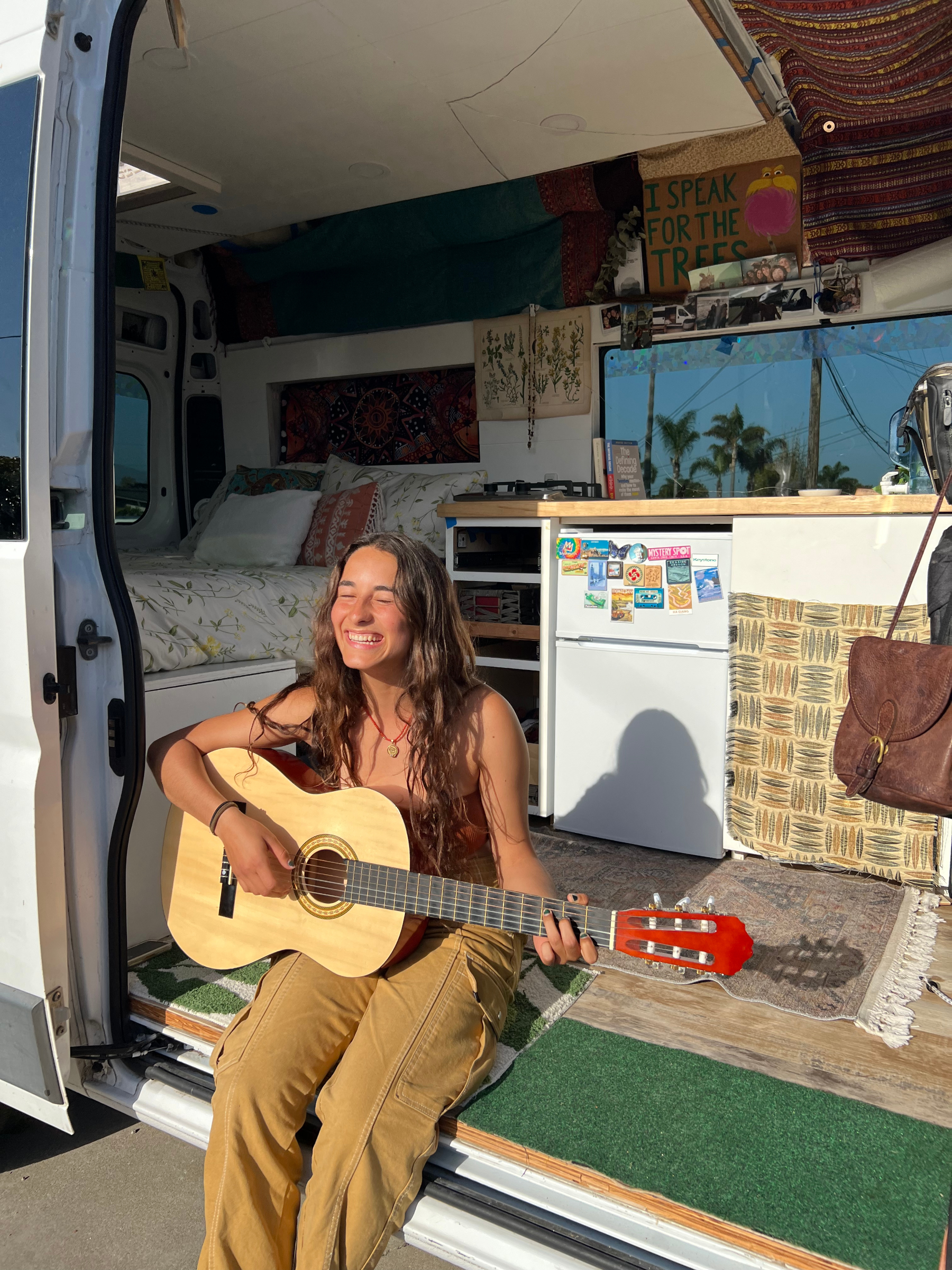

Home.
To some, it’s where the heart is.
To others, it’s a place to avoid at
all costs. To college students,
it’s anywhere you can lay on a
horizontal surface and rest.
To Maya Bengard,
It’s an escape.
Nestled deep within the 68 Block of Isla Vista, UCSB's tightly knit college town, this young woman has made her way in the world by creating a home that allows her to escape its limitations. Unlike many of the houses found on the community's populous Del Playa Drive that reek of a constant “how can 18 people fit into one house?” stench, the charm of Maya’s home is found in its minimalism, its sustainability, and its four wheels.
Greeting us with a smile and open doors, Maya’s home offers more comfort in 88 square feet than all the houses in Isla Vista combined. Driven to find an alternative living situation upon her return from studying abroad, Maya decided to make the switch to van life—an appealing escape from searching ceaselessly spammed Facebook groups for available leases, or from coughing up outrageous rent prices for a classic Isla Vista quintuple room.
Her only qualm?
“Wait, I can only have
four pairs of pants?”

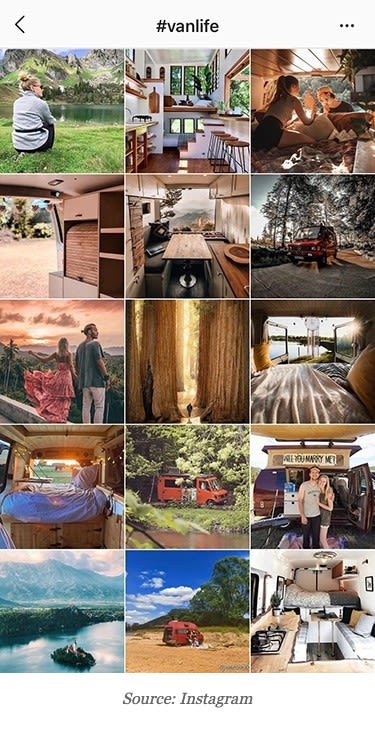
Once she overcame the limited space, Maya (and her four pairs of pants) wholeheartedly embraced Van Life, a movement whose history can be traced back to the Beat Movement of the 50s. Officially coined in 2011 by Foster Huntington, "Van Life" is grounded in a calling for adventure, storytelling, and counterculture. Characterized by a mobile lifestyle and personalized vehicles, van life is a cultural phenomenon poised to be shared—across roads and across social media platforms.
Since Huntington first shared his mobile lifestyle in his Volkswagen Bus via Instagram with the tag "#VanLife," the movement took off. Along for the ride, van lifers have continued sharing their adventures online to educate and to connect with others. #VanLife has taken social media by storm, encouraging more and more folks to trade sedentary living for an adventure on wheels. But, in Isla Vista, van life is more than a trend—UCSB students have lived in vans or alternate housing since the 70s.
While many in the van life movement have made their transition out of desire for adventure, the switch for many Isla Vistans, including Maya, was necessitated by exorbitantly high rent prices and an ever-present housing crisis affecting undergraduate university students. According to the American Educational Research Association, nearly half of undergraduate students have experienced some forms of housing insecurity, including 13% who are homeless. While most of these students work or receive financial aid, only a fraction receive assistance specifically for housing, demonstrating the severity of the lack of affordable housing for college students.
Following this national trend, UCSB’s lack of university-provided housing combined with Isla Vista’s exploitative private developers has led to a dire housing crisis. UCSB has struggled to maintain enough housing for its growing population since the 40s, leading to campus norms of four-plus-person rooms and unfeasible rent prices. While the housing crisis is nothing new, growing student populations and skyrocketing prices are only making it worse. UCSB’s campus newspaper, the Daily Nexus, reports that just between 2015 to 2021, rent for a two-bedroom apartment in Isla Vista increased by a staggering 34%. It’s these increases that force students, like Maya, to escape these obstacles with alternative forms of housing.
An unassuming vehicle
from the outside, Maya’s van transforms into a home
with just the slide of a door.
Bathed in golden light, a warmth emanates from within Maya's home—maybe due to her engaging presence, or the prismatic sticker-paper on the back windshield, casting a stream of rainbow light across the cozy space. Sitting amidst intricate tapestries, floral paintings, and worldly trinkets, Maya eagerly shares her passion for her newfound mobile lifestyle.

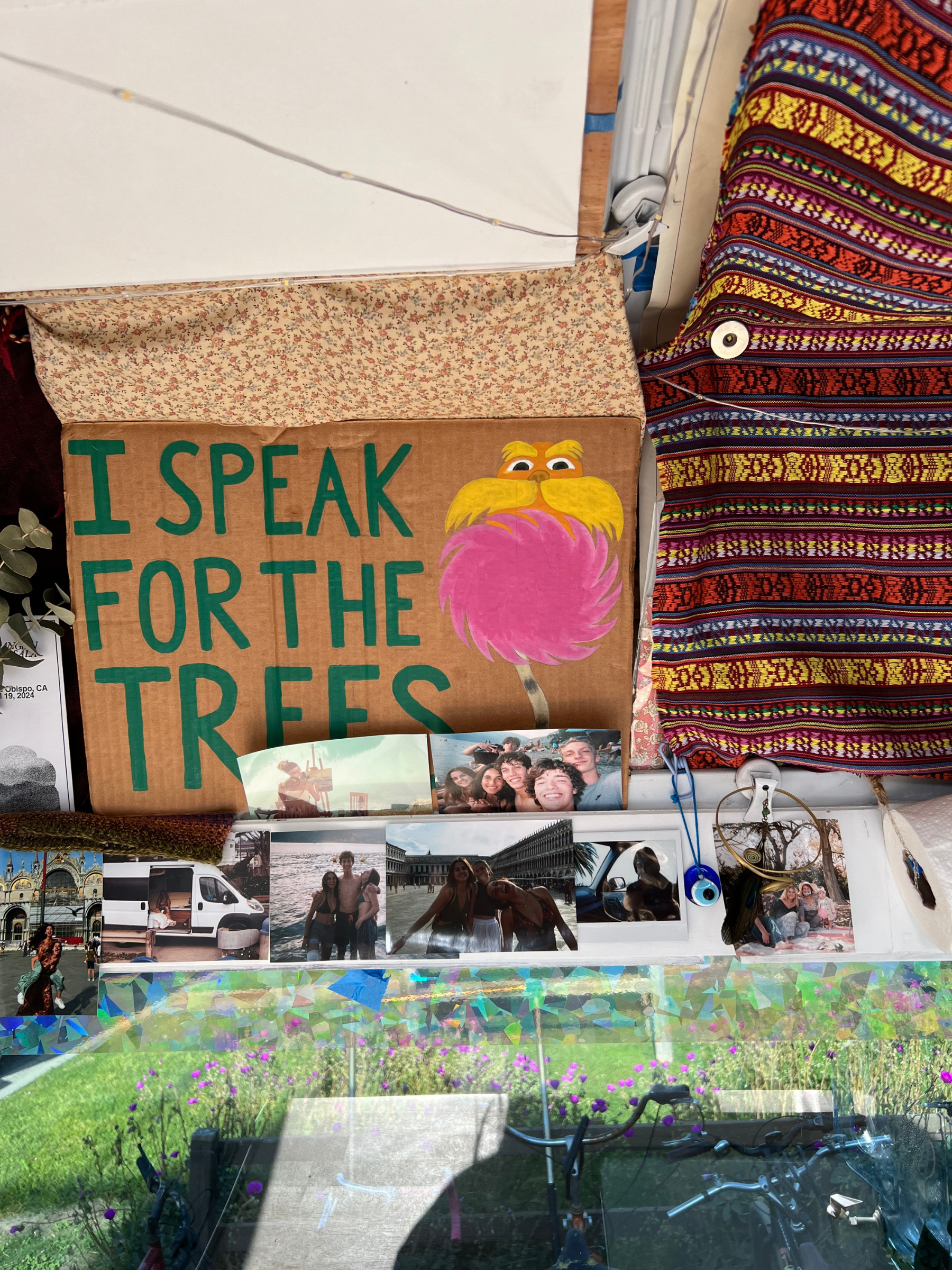
A second year at UCSB, though speaking with a wisdom and calmness beyond her years, Maya recalls that her transition was “interesting,” but not “too bad” as she’d spent plenty of time in the van—she just had never fully lived in it. Now, she and her van are fully acquainted, constantly exploring the world together to take advantage of the unique affordances of van life. Road trips to Big Sur, San Luis Obispo, and Sequoia are now just a part of her routine.
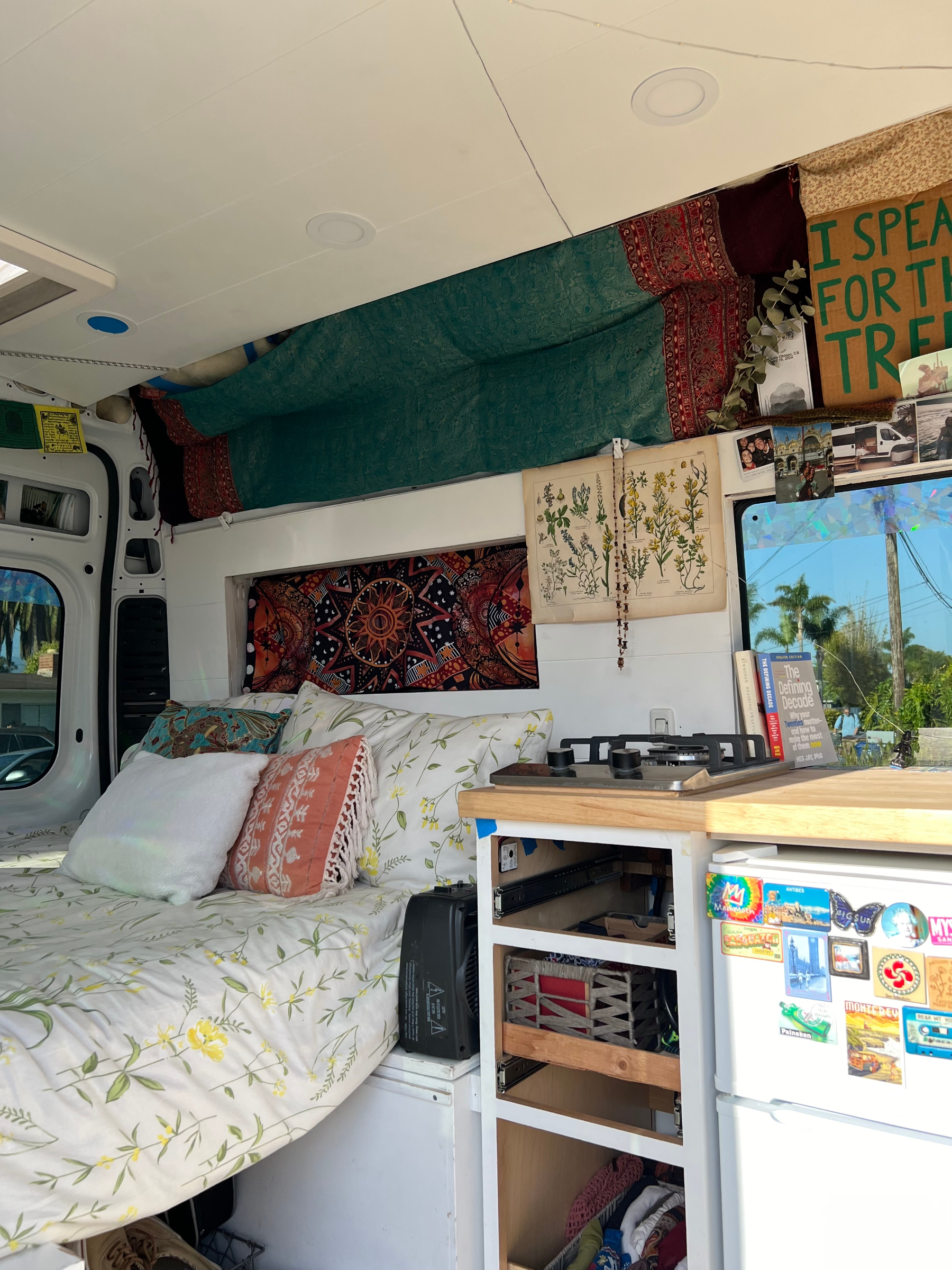

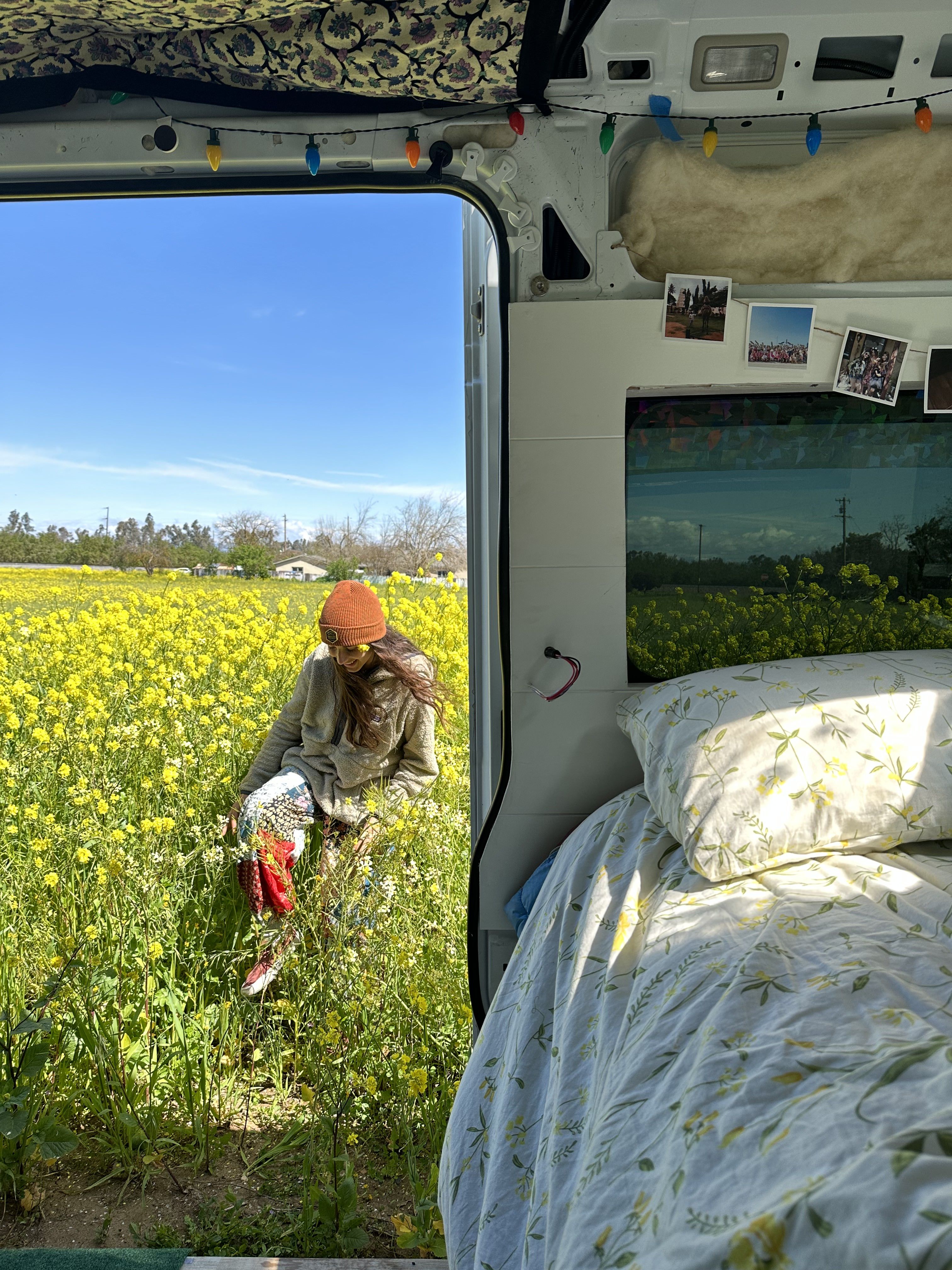
Maya's magnet collection displayed in her van documents her travels, abroad and by van.
"Road trip to see the superbloom with Hanna!"
"End of year camping trip in Big Sur!"
"Went to visit Adam in London!"
"Solo Trip to San Sebastian!"
"Sailing trip with Dad to Greece!"
“I love that my whole home is mobile, and I can just pick it up!”
Though Maya absolutely adores van life and its perks, she notes that not everyone is as accepting of her and others who share her lifestyle. While her immediate family is extremely supportive and “want to steal [the van] all the time,” her other relatives have shared mixed opinions. People have misconceptions about how van lifers interact with their surroundings. Whether it's the false notion that they’re taking parking spots, draining housed folks’ resources, or simply being unclean, these connotations are detrimental to Maya and her community.

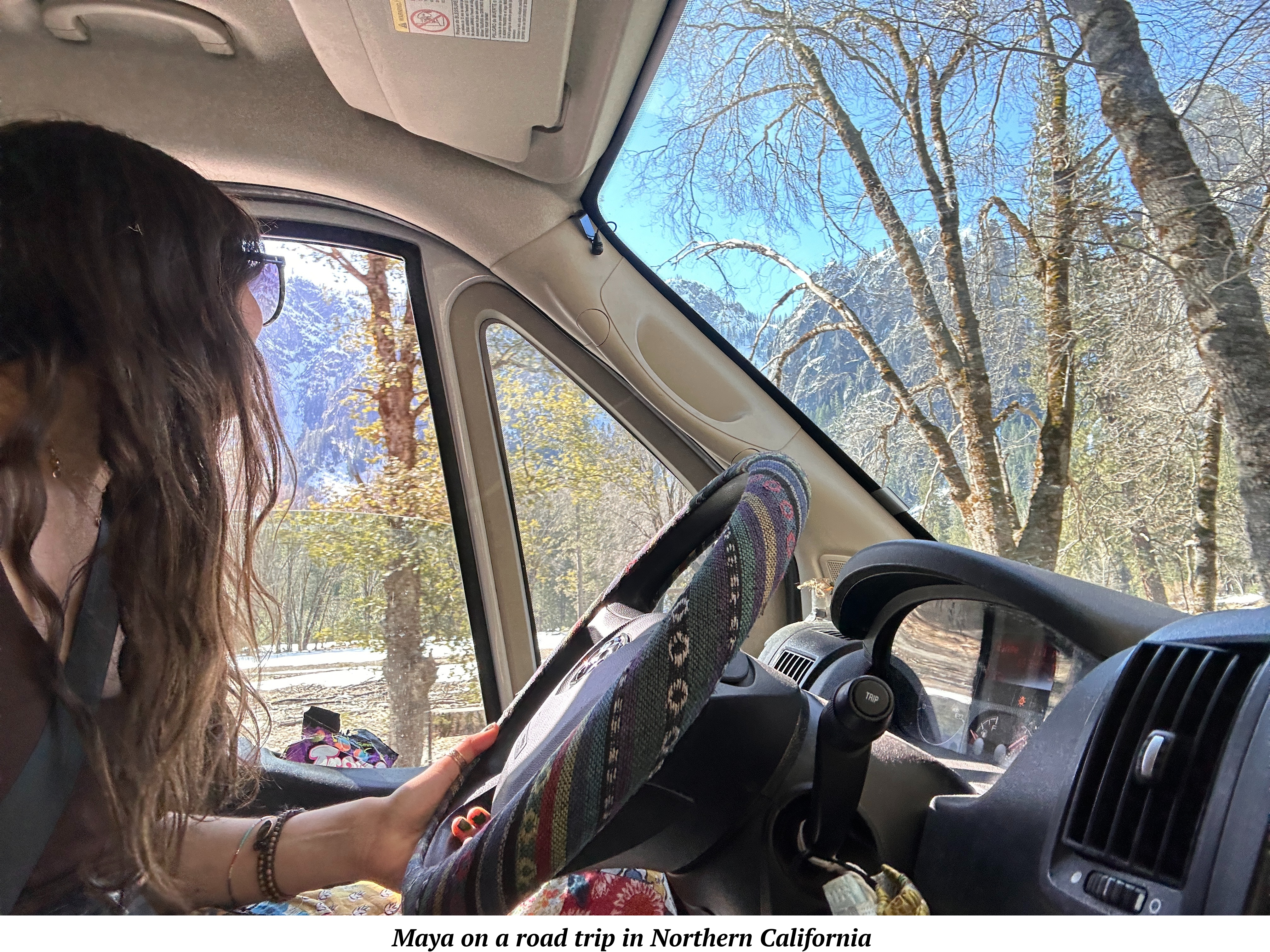
“People think van lifers sort of take advantage.”
Contrary to what these misguided people think, Maya and other van lifers are constantly aware of their impact on the environment and those around them. An Environmental Science major, Maya has internalized a deep awareness and appreciation for each place she and her van inhabit. Her extra precaution and awareness reveal that van life requires an added level of consideration for one’s surroundings—an awareness probably not shared by those who condemn them for “taking advantage” of their space.
“Like, when I’m brushing my teeth, I never want to spit outside the van. I don't want people to see that and think we’re just abusing the area or not taking care.”
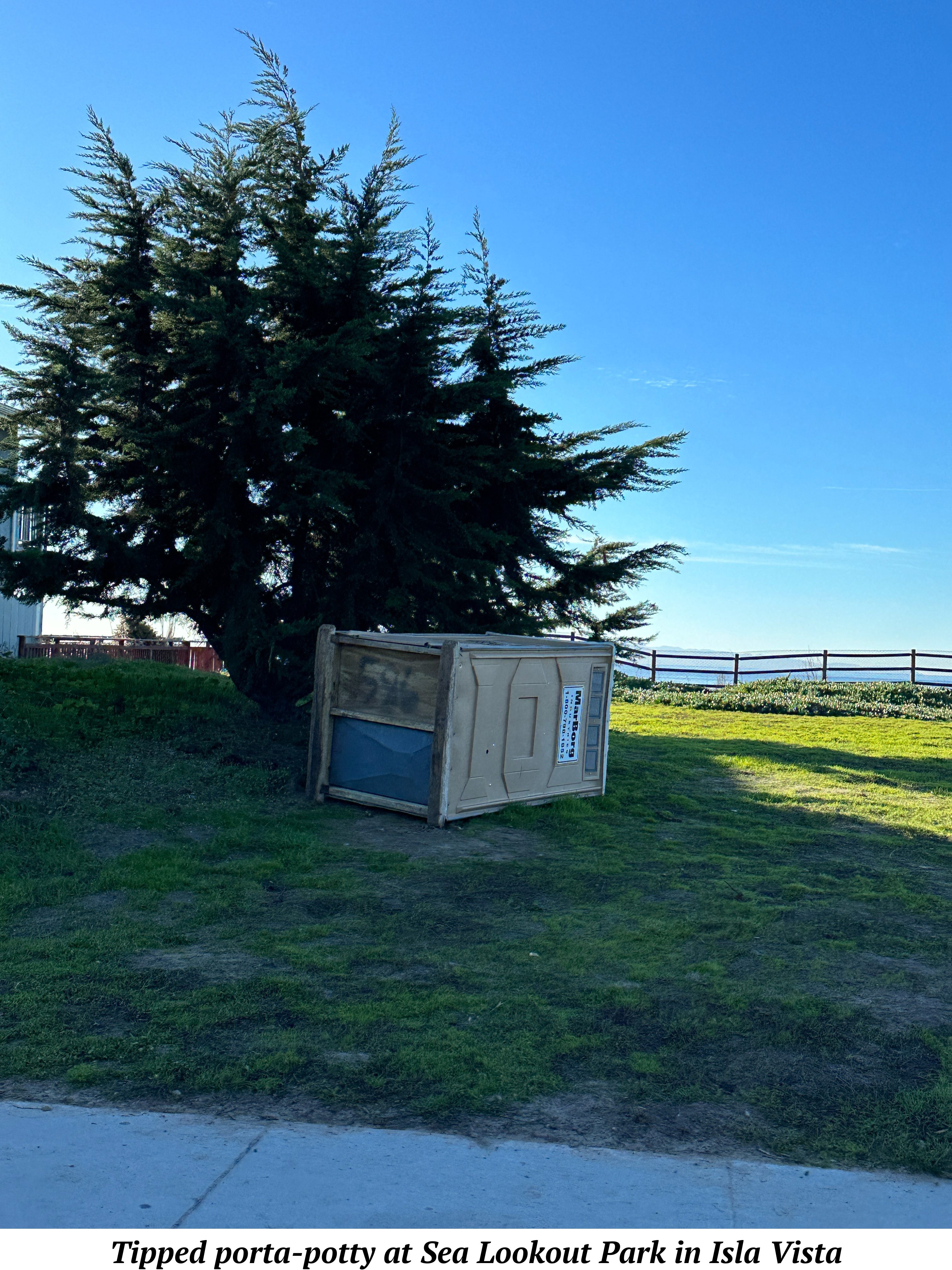
Despite those who perceive van lifers as “free loaders,” each of Maya’s actions proves she is anything but. Actively dispelling these stereotypes, Maya and her community remain cognizant of their environmental and communal impacts—even when those around them are not respectful in return. Often, intoxicated students abuse the porta-potties around Isla Vista, knocking them over for a cheap laugh at the cost of one of few van lifers’ necessary spaces outside of their homes. Maya recalls skating for blocks at a time in search of an upright restroom, lamenting the blatant ignorance shown by some members of the community.
“I found it crazy that they go up to a porta potty after they see their friend go in, and they just flip it over because they think that’s funny.”


Rather than “taking advantage” of others or succumbing to unnecessary obstacles posed by inconsiderate people, van life allows Maya to maximize the full potential of her ideal lifestyle—on her own. Self-sufficient with solar panels and a can-do attitude, she proves that van life not only provides her with enough to thrive, but also the opportunity to live according to her values.
“I can live the way I want to live… It’s an excuse to be even more eco-conscious!”
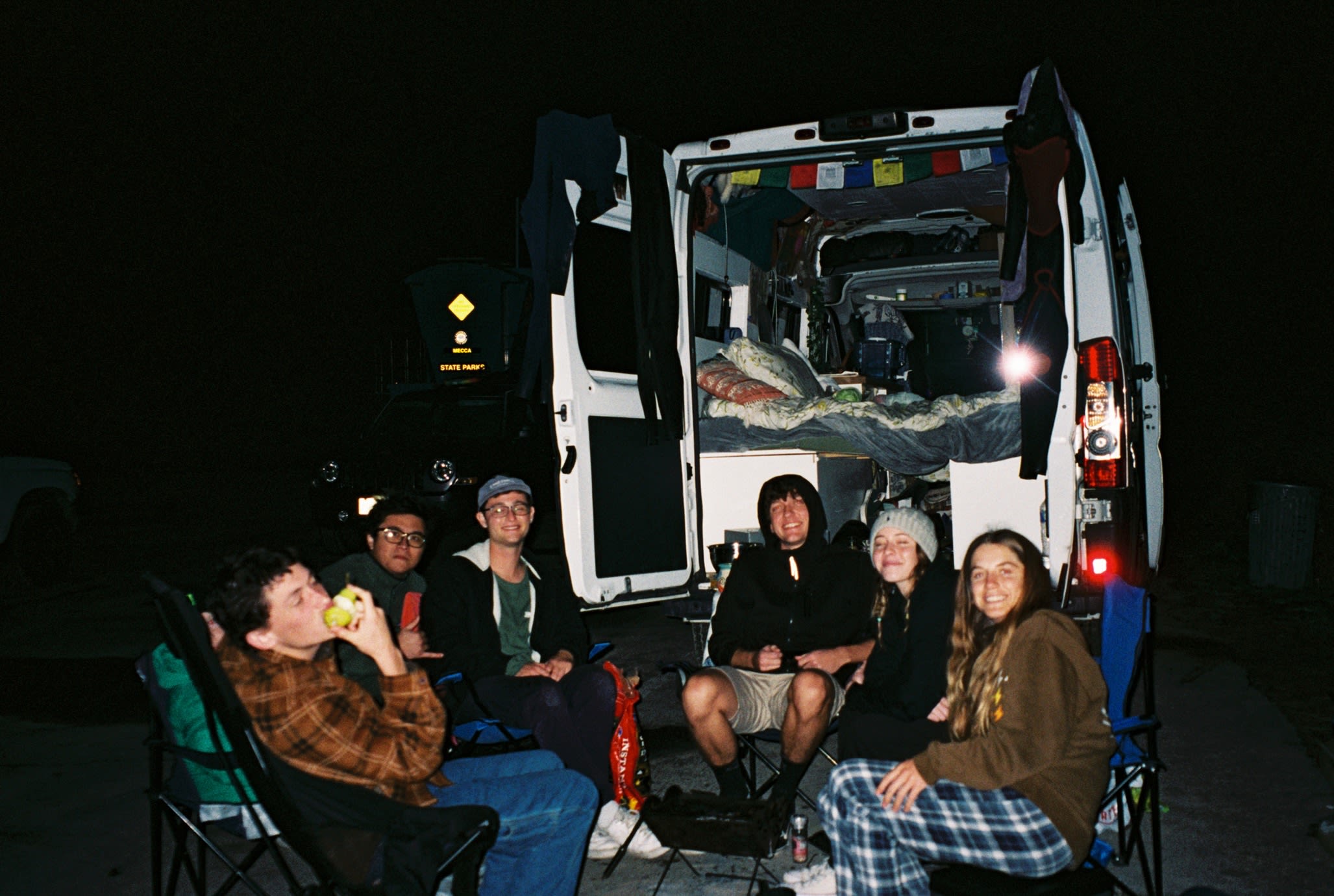
Although she lives in her van independently, Maya isn’t completely alone. She and her van life “neighbors” comprise a thriving community across the one-square mile college town. Isla Vista van life is a testament to how fulfilling minimalism can be, because abundance is found in the community. Equipped with an “IV Van Life” group chat, shared experiences, and each other, Maya and her community face the everyday struggles of college students, which are often compounded by the difficulties of van life, together. When she needed an oil change, having never been to the mechanic, her community came to the rescue, recommending a reputable, vetted spot downtown.“We all help each other out… I have my van community that hooked me up with a connection.”
From recommending mechanics to morning chats across the driveway, Maya and her fellow van lifers support each other just like typical roommates would. “It just feels like, even though I’m not living inside a house with housemates, I still feel like I have housemates,” Maya laughs, “I could go up to any Van Lifer if I ever needed anything, I know that they would help me out.”
The sense of community is bursting at the seams in Isla Vista, and even more so among its flourishing van life community. A town that has seen so much and housed so many generations of students, it is so loved by so many. Maya attests to this with what makes Isla Vista so special.

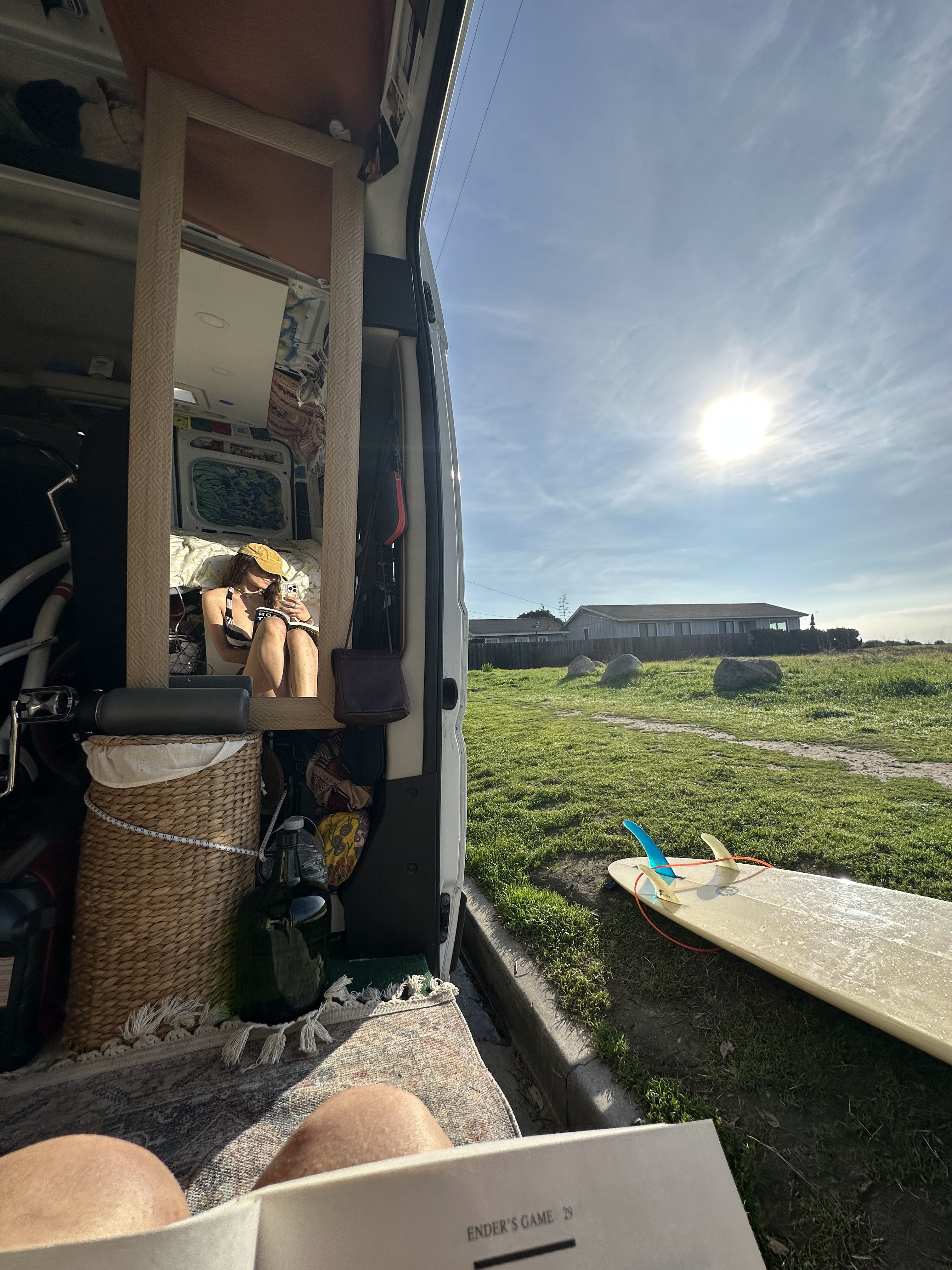
"I can talk about this forever. I love Isla Vista."

Though help isn’t hard to come by in the van community, the female perspective is. Among her van lifer friends, Maya notes that only a few are women. She shares, “I definitely know more men in van life, I feel like it’s kind of male-dominated.”
This male-heavy population lends itself to slight differences in living that make all the difference to Maya. Magnetized walls to quickly attach curtains and block any unwanted onlookers, turning off lights after dark, and generally “making sure there’s nothing people could see that would spark their interest,” Maya takes extra precautions as a woman in van life, “which I feel like guys would just not be as careful about.” Pepper spray always within reach, Maya is constantly aware of the safety measures she must implement while living alone as a woman.
“I’m also a pretty preoccupied person. Being a woman, you kind of have to be.”
Although Maya’s community may be male-dominated, and living alone as a woman comes with its risks, she explains that the person who helped her discover this world is actually a woman very close to her: her sister. Instead of having to secure a livable van on her own, Maya was fortunate that her sister was already familiar with van life. A passion project during the pandemic, Maya’s sister built out the entire van—with a little help from Maya (and YouTube).
“It was definitely her project… She taught me the best tips and tricks on how to live in such a small confined space.”
Learning the ropes from a female role model, and being a woman living out her dreams, Maya’s sister was instrumental in her decision and transition. Following her sister’s example, Maya urges other women, whether interested in van life or not, to discover their capabilities and realize their potential.
“Just because other people think you can’t do it doesn’t mean you can’t learn something. You can learn anything as a woman.”

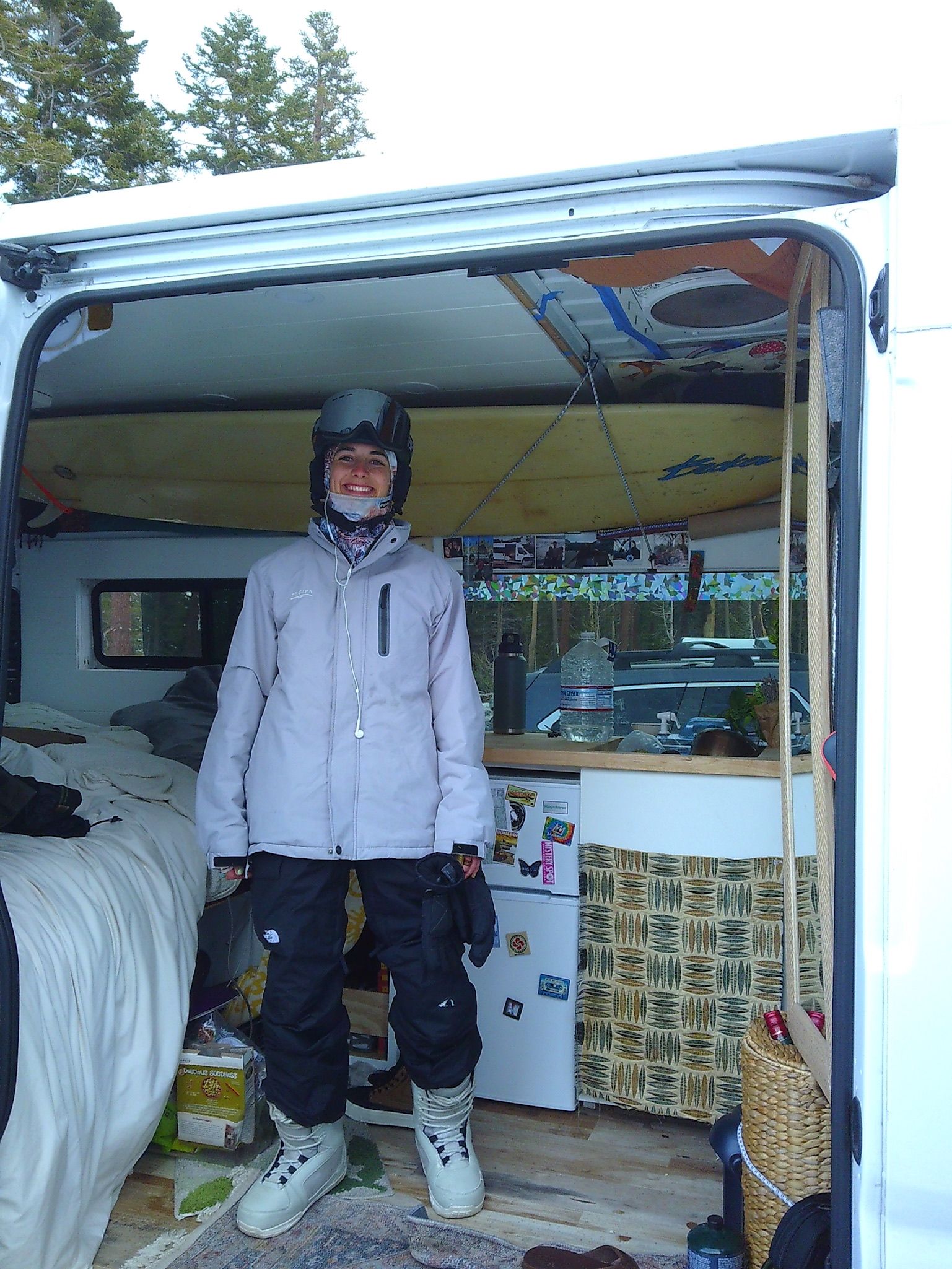
Although Maya must return the van to her sister when the school year ends, she notes the irreversible impact van life has had on her.
“Van life made me a super sociable person, like, way more confident.”
Van life has physically brought her to new places and personally brought her to new heights. Stepping into Maya’s van is a tangible reminder that she and all women can accomplish anything they set their minds to. It has allowed her to escape the constraints of Isla Vista’s housing crisis, to escape imposing societal expectations, and to escape a former version of herself, blooming into a confident young woman.
Maya’s van has not only brought her a lifestyle and a community, but it has also brought her a home. Whether home is a comfort, a hassle, a flat surface, or an escape, Maya and her home exemplify the magic that happens when women can escape limitations and forge their own place in the world.
Even if that place is a driveway, for now.
A special thanks to Maya Bengard for sharing her story and images with us, and inviting us into her home.
 Built with Shorthand